Finding the Rails
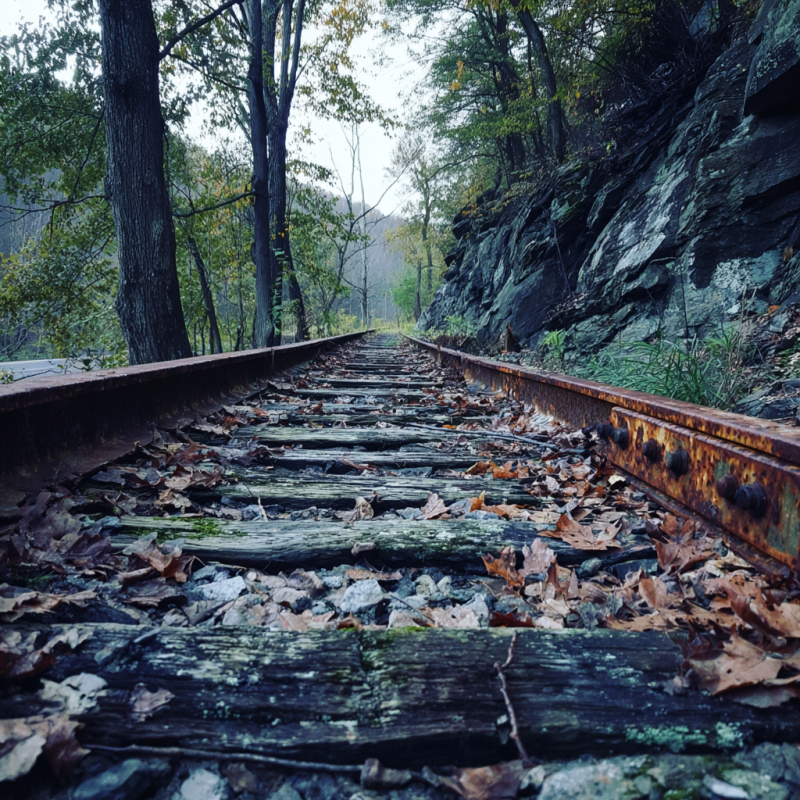
The adventure starts not at a station, but wherever you can spot the old tracks poking out from a street corner or a field. Some are overgrown with grass and wildflowers; others cut sharply through suburban streets, their rails still gleaming with rust.
There’s a thrill in discovering these trails because they feel hidden. You have to know where to look, or simply wander until the urban grid opens into something unexpected. One evening, I followed a thin strip of metal through a neighborhood of small brick houses, past garages with graffiti, and suddenly I was in a clearing where the trees arched overhead. The rail trail was quiet, only the distant hum of cars on a nearby highway reminding me that I hadn’t gone far from the city.
The Story in the Rust
Rust tells stories. Every flake of it is a page in the history of these rails. Some of the lines date back over a century, carrying the echoes of locomotives that thundered past towns long before smartphones or traffic lights. I found old signs leaning crookedly against trees: “No Trespassing” from the 1920s, faded paint warning of a bridge or a switch.
Walking these trails is like stepping into a forgotten novel. The ground is uneven, sometimes overgrown, and yet you can almost feel the weight of the trains that used to pass here. Some tracks have been converted to official trails with signs and benches. Others remain wild, untamed, a secret path through brush and field.
Urban Encounters Along the Lines
The rail trails aren’t just for nature lovers; they cut right through towns and neighborhoods. In some places, old warehouses line the path, their sides covered in murals that feel like they were made for the train travelers of another era. You can find graffiti that’s almost beautiful — bursts of color and shape in contrast to the gray concrete.
Occasionally, you’ll encounter someone on the trail: a runner in sneakers, a photographer capturing the way morning fog hugs the rails, or a local dog walker who greets you with a nod. It’s a shared space, quiet but alive. And the urban edges make it feel less like a park and more like an adventure — because it’s unsanctioned, uncurated, slightly risky, and completely real.
Nature Reclaiming the Rails
Where the rails leave the towns, nature begins to reclaim them. Trees arch overhead, creating tunnels of green. Wildflowers bloom between ties, and the occasional rabbit or deer crosses the path. There’s a quiet rhythm here — the creak of a branch in the wind, the soft rustle of leaves, the metallic whisper of the rail under your fingertips.
One morning, I walked a long stretch just as the sun rose, painting the rust in shades of gold and orange. The trail curved along a small creek, and I realized this forgotten path had become a sanctuary for birds, insects, and city wanderers alike. You can almost imagine the trains from the past running parallel to your steps, carrying stories of long-gone passengers.
Photography and Journaling
Rail trails are perfect for creatives. Every curve, shadow, and rail offers a framing opportunity. I carried a camera and notebook, stopping often to capture moments: a graffiti mural peeking through overgrown weeds, a solitary rail stretching into the fog, a stray leaf spinning along the metal track.
The trails reward patience. Walk slowly. Look down, up, and around. Photograph the textures — the rust, the wood, the chipped paint. And take notes. The soundscape, the smells, the temperature — these are details that make a story feel alive, not just a picture or a map coordinate.
Short and Overnight Trips
Some rail trails are short, perfect for a two-hour afternoon wander. Others extend for miles, connecting small towns, rivers, and parks. You can plan a full-day hike or even an overnight micro-escape: a tent pitched near the trees, a fire built safely off the trail, a notebook filled with sketches and reflections.
One trail I explored stretched from a small suburban edge to the middle of an open field. By the end, I felt like I’d traveled worlds away from the city, even though I could see its lights in the distance. That’s the magic of rail trails — intimate, wild, and profoundly human.
Safety and Etiquette
Even though rail trails are beautiful and adventurous, they come with responsibilities:
Stay off active rails. Many old lines have been abandoned, but some still carry freight trains occasionally. Know your route.
Respect private property. Some stretches run near homes or farms. Walk only where allowed or visible from public paths.
Leave no trace. Take your trash with you. Don’t vandalize signs or historical markers.
Bring essentials. Water, comfortable shoes, and a phone for safety. Some areas are remote or uneven.
Share the trail. Cyclists, runners, dog walkers — everyone is part of this shared space.
Respect keeps these trails alive, usable, and enjoyable for everyone.
Local Stories Along the Tracks
The best part about rail trails isn’t just scenery — it’s the stories attached to them. I met an elderly man on one trail who used to ride the trains as a boy to deliver newspapers. He described each town the line passed through, naming old stores and playgrounds that had disappeared decades ago.
Another time, I stumbled upon a small community garden near an abandoned depot. Volunteers tended vegetables along the tracks, keeping the space alive, colorful, and surprisingly vibrant. These human touches remind you that abandoned rails aren’t lifeless — they’re waiting for the people who will give them new purpose.
Tips for Exploring Rust Lines & Rail Trails
If you want to wander these forgotten paths like a local:
Wear sturdy shoes. Rails and ties can be slippery, uneven, and overgrown.
Plan your route. Some trails are maintained, others are unofficial. Check local maps or community forums.
Carry a notebook or camera. You’ll want to capture textures, stories, and small discoveries.
Go early or late. Sunrises and sunsets make the rails glow; fewer people means more solitude.
Observe closely. Look for history in the details — old signs, bridges, fences, and graffiti.
Why These Trails Matter
Rail trails are more than walking paths. They’re a connection to the past, a bridge between urban spaces and wild nature, and a canvas for creativity. The rust, the wood, and the weeds tell a story that’s not in guidebooks — a story of change, decay, and unexpected beauty.
Walking these trails, you learn to slow down, notice textures, and let your imagination fill the gaps. A rail once busy with locomotives now hosts the footsteps of wanderers, cyclists, and storytellers. That continuity is what makes these trails special: a shared human experience stretching across time and space.
If you’re looking for a travel experience that’s slightly offbeat, slightly mysterious, and utterly rewarding, Rust Lines & Rail Trails are perfect. They combine history, urban grit, quiet nature, and personal discovery in ways that ordinary parks or city streets cannot.
Follow the rails. Let the rust, wildflowers, and occasional mural guide you. Stop, look, and listen. Notice the textures, the sounds, the traces of human life long gone. And when you finally step back into the modern streets of your town, carry a little of the trail with you — the stillness, the stories, and the quiet magic of places forgotten but not lost.