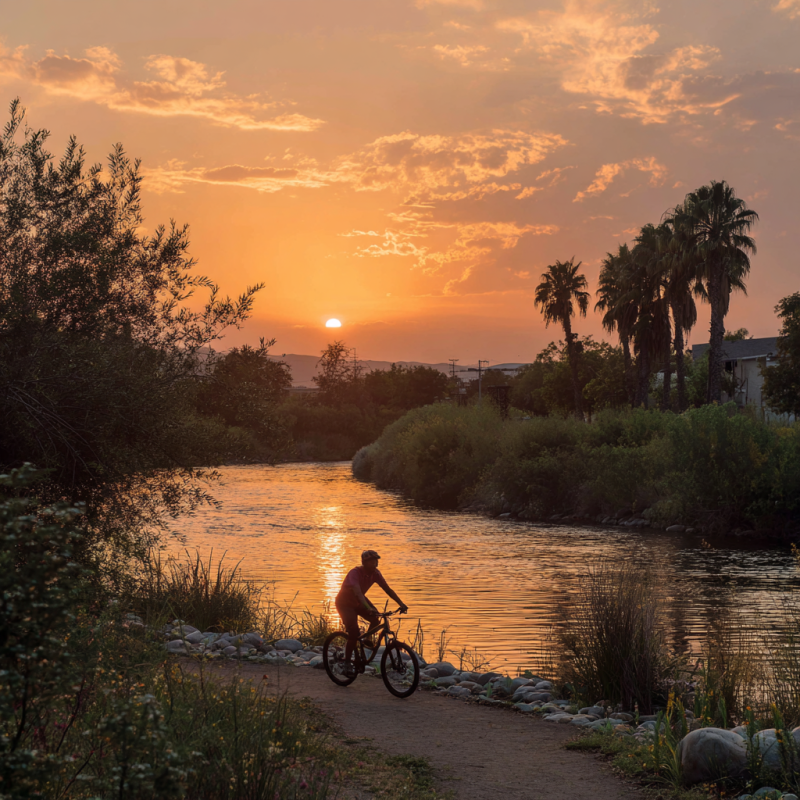
Following the Water
The first step is simple: find a river or creek and start walking. I often begin at a bridge or a small parking lot tucked near the water. From there, the trails curve along the banks, sometimes disappearing behind trees, sometimes opening to small green spaces or unexpected overlooks.
One morning, I wandered along a river just outside downtown. The sun reflected off the water, creating dancing patterns on nearby sidewalks. Ducks paddled lazily in the current, and a gentle breeze carried the faint smell of grass, earth, and distant coffee. The city noises faded with every step, replaced by the soft rhythm of flowing water.
Hidden Benches and Quiet Spots
Riverside loops are perfect for finding tiny pockets of solitude. Small benches are scattered along the paths, often tucked under overhanging trees or near bends in the river. You can sit for a while, watch the light shift across the water, and notice the details most people miss: the ripple of water over a submerged branch, a dragonfly hovering just above the surface, or the way a fallen leaf spins in the current.
I found a bench under a willow tree where the branches brushed the water like a curtain. For an hour, I just sat there, notebook in hand, listening to the sounds of the city softened by the river. It felt like stepping into a small private world, one the river was sharing with me alone.
Bridges, Murals, and Hidden Views
Many riverside loops pass under or near bridges, and these often reveal unexpected art and architecture. Some bridges are covered in graffiti, while others frame views of the city skyline perfectly. Walking beneath them, you notice textures — peeling paint, rusting metal, or carved initials from long-past visitors.
I remember one loop that curved under an old iron bridge. From the right angle, the light created a prism of shadows and reflections in the water, turning the area into a natural photograph. Nearby, a local artist had painted a mural on a retaining wall, bold colors contrasting with the muted greens and browns of the riverbank. It’s these small touches — art, architecture, light — that transform ordinary loops into extraordinary experiences.
Nature’s Quiet Takeover
Riverside loops often feel like nature creeping back into urban life. Trees arch over the paths, grasses sway along the banks, and wildlife quietly makes its home. You might see herons stalking fish, squirrels darting through branches, or small turtles sunning themselves on rocks.
One evening, I followed a trail that curved behind a row of houses. The path narrowed and became dirtier, more wild. It felt untamed, even though the city was just a few blocks away. A pair of deer emerged from the trees, watched me silently, then disappeared again. Walking along these loops, you realize how quickly nature can reclaim space when you give it room.
Photography and Journaling Along the Loops
Riverside loops are ideal for creatives. Every curve, reflection, and shadow offers inspiration. I often carry a camera and notebook, capturing details that might go unnoticed otherwise: the delicate ripple of water over rocks, the way sunlight filters through trees, or a discarded boat tied loosely to a post.
Walking slowly is key. The loops reward patience. Stop. Look. Listen. Notice the texture of the path under your shoes, the scent of water and earth, the small sounds that make each loop unique. Every step is an opportunity to record a memory, sketch an idea, or frame a photo.
Day Trips and Micro Escapes
Riverside loops aren’t just for morning strolls; they’re perfect for short day trips or mini escapes. Bring a picnic, a blanket, and a good book. Stop at a bench, watch the water, and take a break from the rush of daily life. Even loops just a few miles long can feel like a retreat from the city.
One afternoon, I packed a small lunch and walked a trail that circled a small river bend. I sat on a bench shaded by maple trees, eating sandwiches while geese floated lazily by. It was only a few hours, but I left feeling like I’d been away for a weekend.
Safety and Etiquette
Even though riverside loops are calm and scenic, a few tips help make your visit safe and enjoyable:
Wear comfortable shoes. Trails can be dirt, gravel, or uneven pavement.
Stay on marked paths. Protect wildlife and private property.
Bring water and snacks. Loops may be longer than they appear.
Respect other visitors. Cyclists, joggers, and dog walkers share the paths.
Carry essentials for safety. Phone, small first aid kit, and proper clothing for weather.
Local Stories Along the Loops
One of my favorite parts of riverside exploration is the people you meet. Early-morning walkers, artists painting en plein air, kids skipping stones — they all add life to the loops.
I met a local photographer who spends every morning walking the same stretch of trail, capturing the changing light across the river through the seasons. She told me that each visit reveals something new, even in familiar spots — a fallen branch, a bird’s nest, or a hidden flower patch. These loops aren’t just scenic; they’re living, evolving spaces.
Why Riverside Loops Matter
Riverside loops offer something rare: intimacy with both the city and nature. They’re small enough to explore on foot, accessible to everyone, and quiet enough to encourage reflection. You can wander for minutes or hours, and each loop offers a slightly different experience.
They remind us that adventure doesn’t have to be grand or far away. Sometimes the best moments are subtle — a shadow on water, the hum of wind in trees, or the quiet of an empty bench along a riverbend.
Riverside loops are about slowing down, noticing the details, and letting the water guide you through a city’s hidden corners. They’re for photographers, writers, walkers, and anyone willing to step off the busy streets and explore quietly.
Next time you’re near a river, creek, or canal, take a detour from the main roads. Follow the loops. Watch how the water moves, how the light changes, how the city whispers in moments of stillness. Riverside loops are small treasures, offering peace, creativity, and a chance to connect with the world just beyond the sidewalks.